Air cargo of dangerous goods
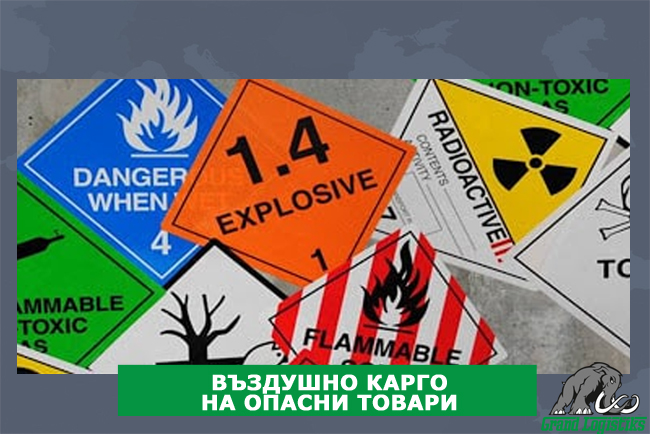
Dangerous goods are objects or substances that can endanger health, safety and property or the environment during air transport and are classified in 9 classes according to the Technical Instructions of the International Civil Aviation Organization (ICAO) on safe transport of dangerous goods by air.
Class 1: Explosives, including subclasses: cargoes and substances and cargoes which may pose a risk of mass explosion; loads and substances that pose a risk of disposal but do not pose a risk of mass explosion; cargoes and substances which present a risk of ignition or a minor risk of explosion, or a minor risk of ejection, or both, but not a risk of mass explosion; cargoes and substances which do not present a significant hazard and the last in this class subclass - extremely insensitive substances which pose a risk of mass explosion;
Class 2: Gases: combustible gases; non-combustible non-toxic gases; toxic gases.
Class 3: Combustible liquids
Class 4: Combustible solids and substances which may ignite spontaneously or emit flammable gases on contact with water
Dangerous goods also include: oxidizing substances or organic peroxides Class 5, infectious substances Class 6, Class 7 - radioactive materials, Class 8 - corrosive substances and Class 9 - various dangerous goods or substances not included in previous classes and substances, but dangerous for the environment.
Prohibited for transport by air in all circumstances are dangerous goods that: are prone to explosion; are highly flammable; produce a dangerous increase in heat, toxic or corrosive gas; are volatile under normal conditions of carriage by air.
The documents defining the conditions for dangerous goods by air are: ORDINANCE № 18 OF 4 MARCH 1999 ON SAFE TRANSPORT OF DANGEROUS GOODS BY AIR; Technical Instructions of the International Civil Aviation Organization for the Carriage of Dangerous Goods by Air (ICAO); IATA International Air Transport Organization (IATA) Regulations for the Carriage of Dangerous Goods by Air; Applicable specific requirements and regulations for air transport to operators and countries involved in the transport of dangerous goods by air.
The Minister of Transport may exceptionally authorize the transport of dangerous goods by air if there are exceptional circumstances in cases where the use of other modes of transport is impossible and after all necessary safety measures have been taken during transport.
Packing of dangerous goods for safe transport
Dangerous goods must be packed in packages of good quality and intact integrity, designed and closed in such a way as to prevent leakage or spillage which may occur under normal conditions of air transport from changes in temperature, humidity, pressure or vibration.
Dangerous goods must not be packed in the same outer packaging as other goods, dangerous or non-dangerous, if they may react dangerously with each other.
The packaging must be of such dimensions that there is sufficient space for all the necessary labels and markings.
The obligations of the consignor are: not to offer dangerous goods for air transport, prohibited for transportation by air, to pack, mark and label properly dangerous goods; to present a "Dangerous Goods Declaration" prepared and signed by him in a duplicate form, which must be attached to the bill of lading, in the language required by the country of dispatch, and also in English, signed by him, drawn up in accordance with the necessary requirements ; to deliver the dangerous goods to the airport at the agreed time, so that they do not have to be stored at the airport. An exception can be made for airports that have warehouses prepared for the storage of dangerous goods.
The obligations of the carrier are: to accept dangerous goods only if they are packed according to the requirements and are accompanied by the necessary documents; provide a place to inspect the outer packaging; to provide a place for storage of dangerous goods, if necessary and agreed, as well as suitable containers for the transport of dangerous goods; to provide a specially equipped place in the area of the airport for the loading of dangerous goods, away from airport buildings and other places, so as not to endanger the lives of people at the airport.
Acceptance of dangerous goods by air from the carrier is done through the use of a control card - a list of samples. All persons performing activities related to the conditions and by the order of this ordinance shall be obliged to ensure and maintain the qualification of the personnel.
Grand Logistiks
*Excuse us if there is an inaccuracy in the translation - a common translator is used.